 Membership
 Donate
 Get Involved

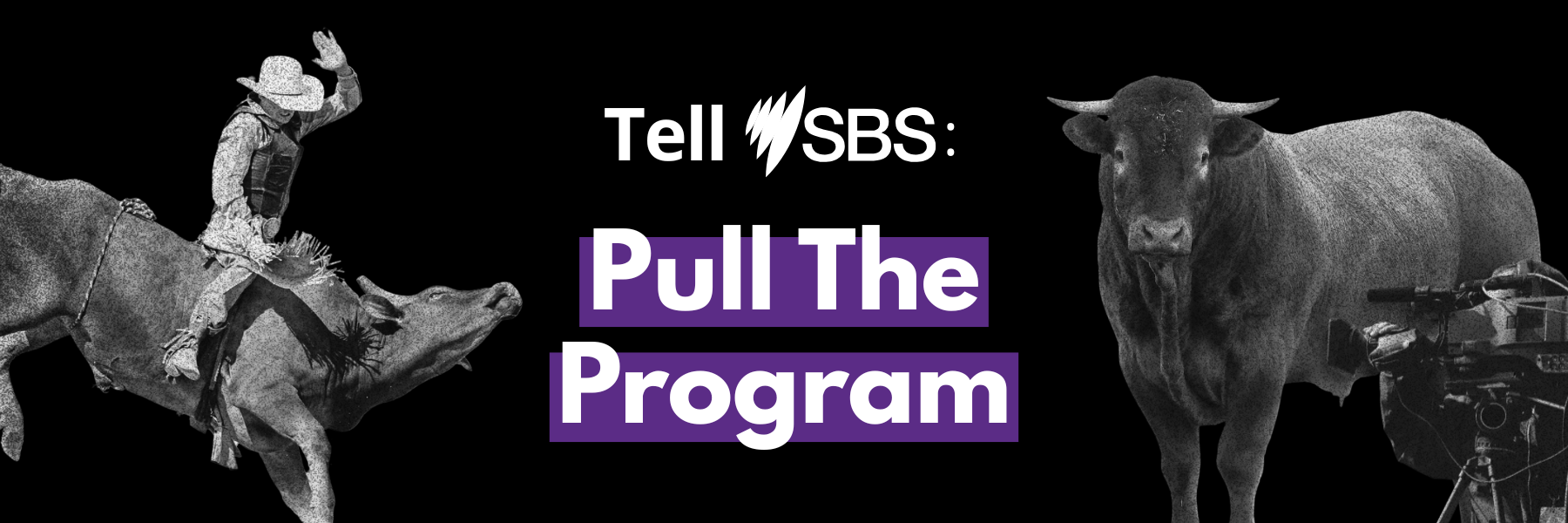
Bulls are prey animals that seek the security of a herd. Bull riding events deliberately exploit their fear response – isolating them in chutes, surrounding them with amplified music, crowds and fireworks, then using physical devices to provoke a bucking reaction in front of a paying audience.
The industry frames bucking as playfulness. Animal welfare experts are clear it's the opposite: a fear response from an animal trying to escape a threat it can't get away from.
Bull riding is not entertainment.
It is an animal being deliberately terrified, provoked and forced into panic. Our television stations should be exposing animal cruelty, not packaging it as entertainment.
Documented practices include:
- Isolation from the herd, confinement in chutes
- Loud crowds, amplified music, bright lights, fireworks
- Flank straps around the sensitive underbelly
- Electric prodders, spurs and other aversive stimuli
- Striking, kicking and tail-twisting to provoke fear
Take Action
|
| Tell SBS to Pull the Program |
Points you can draw on
Don't copy this line for line – SBS can tell, and it's easy to filter out. Pick two or three points that land for you and put them in your own words.
- Australians increasingly expect animals to be treated with compassion, not used as unwilling participants in a spectacle for profit.
- The Australian Animal Welfare Standards and Guidelines for Cattle call for calm, quiet handling. Bull riding is the opposite of that.
- RSPCA WA has publicly described rodeo events as "outdated and inhumane."
- SBS itself has previously reported on rodeo cruelty, including a bull's catastrophic leg injury at a 2017 Adelaide rodeo – broadcasting PBR now sits uneasily alongside that reporting.
- As a publicly funded broadcaster, SBS's Charter asks it to reflect the changing values of Australian society, not lag behind them.


